Table Of Content

I'm an HVAC professional with 10 years of working experience from design and installation to service, operation and maintenance. I believe with better knowledge, we all can have a more energy-efficient world. Among all, the minimum duct height is the most critical element but is easily forgotten. If the duct height is not sufficient, workers will simply compress the duct collar in order to fit and connect the flexible duct.
Three Elements of Efficient Ductwork Design
However, their interior surface is more likely to restrict airflow and can be more prone to mold and mildew growth if not properly maintained. Upgrading existing duct systems includes thoroughly evaluating the current performance and identifying potential areas for improvement. Upgrades can encompass resizing ducts to better suit the system’s requirements, enhancing the insulation, or sealing any leaks to boost overall efficiency. Comprehending the intricacies of ductwork design is about strategizing and constructing a network of conduits that transport warm or cool air throughout the structure.
Minimizing Heat Gain or Loss
Higher velocity would create a volume of air flow that would cause “windy” noises in your ductwork and vents and will damage them over time. If a given duct diameter produces a velocity above 1500 FPM, then using ductwork with larger diameter is another way to offset it. We don’t design for compression, but you can see that if the installer used flex and didn’t pull the inner liiner tight, leaving 4% longitudinal compression, you’d need a 12″ flex duct rather than 10″.
Choose your duct size
Inspections can identify potential risks, such as damaged sections that may compromise the system's integrity. Professional cleaning, adhering to standards set by organizations like the EPA, ensures the removal of materials that could fuel a fire, contributing to a safer environment. Integrating smoke detectors within ductwork systems enhances early fire detection capabilities, allowing for prompt activation of fire suppression systems and evacuation protocols. These detectors vary in technology, including photoelectric and ionization types, each suitable for different applications.
The shape of the ducts and how straight or bendy their path is also affects how easily air can move, just like a straight straw versus one with lots of twists and turns. Ever since he created this website, Yu has helped hundreds of homeowners and engineers. With the above steps and examples, I hope by now you can design the ductwork for your home.
MECHANICAL EQUIPMENT ROOMS
Contact Stack Heating, Cooling & Electric today to have your ductwork inspected by a reliable contractor. If you use a thin straw, it's hard to suck the milkshake up, and you have to work really hard to get a sip. If they're too small (thin straw), the air (milkshake) can't move through them easily, and the system has to work harder. But they can't be too big either, or the air won't move fast enough to get to where it needs to go.
Calculate the CFM for Each Room
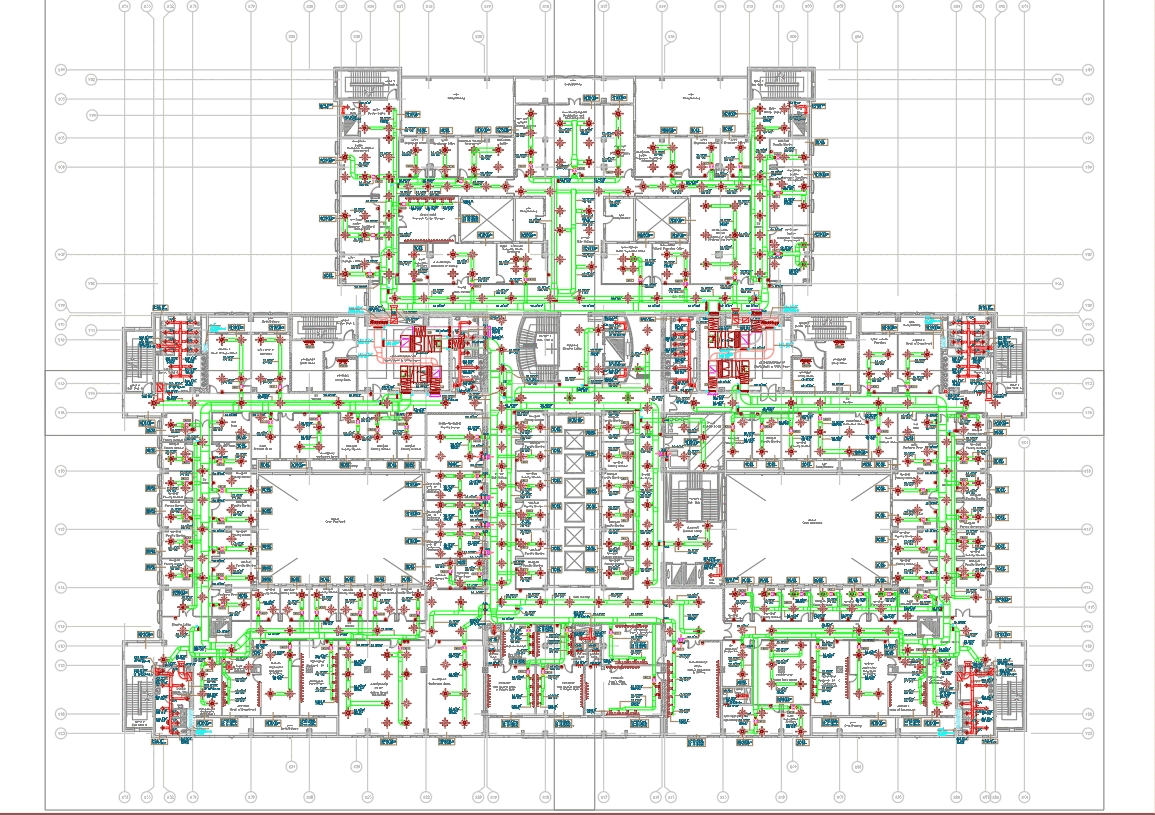
By choosing The AC Therapist for your ductwork design needs, you’re choosing a partner who is dedicated to enhancing the comfort and quality of your home. This involves installing multiple thermostats and motorized dampers to control the temperature in different zones independently. Zoning can be particularly beneficial in buildings with varying occupancy or different heating and cooling needs in different areas. Cleaning the ductwork and ensuring that all vents and registers are clear of obstructions can improve air quality and airflow efficiency. Consider hiring a professional duct cleaning service if the ducts are heavily soiled.
These valves can be adjusted to ensure that each zone receives the appropriate amount of conditioned air, preventing any imbalances in temperature or comfort levels. To fine-tune the airflow balance, HVAC professionals can utilize dampers, balancing valves, or variable air volume (VAV) systems. Dampers are adjustable plates within the ducts that can be used to control the airflow to different areas.
As a reminder, you need to identify the size and type of the grille/diffuser before this step. Otherwise, you don’t know how many numbers of grille/diffuser you need for each room.
Sheet metal, particularly galvanized steel, is a popular choice for HVAC ductwork due to its durability and fire resistance. It is commonly used in commercial applications where strength and longevity are important factors. Proper insulation can be added to sheet metal ducts to improve thermal efficiency. The choice of duct materials is essential for optimal performance and longevity.
Our professional duct sizing service will provide you with a well-balanced duct system that is designed and engineered based on the individual room requirements of your home. Maximum Velocity – The air flow speed the ductwork can safely handle without causing too much pressure, excessive noise or potential air loss and waste. The best method for determining system size is to use a Manual J load calculation for the entire home or building.
The choice of ductwork materials significantly impacts the system's fire safety. Metal ducts, known for their non-combustibility, are preferred in areas at high risk for fire. Fiberglass and certain types of flexible ductwork, while offering advantages in specific applications, require careful consideration due to their varying fire resistance ratings. Employing fire-resistant materials, especially in high-risk areas near heating equipment, is a fundamental safety measure.
Up to 20 percent of your conditioned air is lost before it ever reaches its destination. It leaks out of the ducts in places such as the attic or basement where it does no good. Fiberglass insulation is a popular choice due to its affordability, flexibility, and good insulation properties. It can be easily wrapped around ducts or inserted into pre-formed insulation sleeves. Foam board insulation, on the other hand, offers higher R-values and is ideal for applications where space is limited. Reflective insulation, often used in hot climates, works by reflecting radiant heat away from the ducts.
The ductwork design significantly impacts the noise levels of HVAC systems, playing a crucial role in indoor environments’ overall comfort and serenity. Zoning and VAV systems offer greater control over airflow and temperature distribution, resulting in energy savings. By dividing the space into zones and controlling the airflow to each zone based on occupancy or temperature requirements, you can avoid conditioning unoccupied areas.
How Fluid Dynamics, 3D Printing Delivered a Better Air Duct - Modern Machine Shop
How Fluid Dynamics, 3D Printing Delivered a Better Air Duct.
Posted: Tue, 04 May 2021 07:00:00 GMT [source]
Whether for residential or commercial applications, they offer a compelling alternative to traditional ducted systems, aligning with modern demands for comfort, efficiency, and sustainability. When outfitting your HVAC system, the ductwork you choose is as crucial as the system itself. It's not just about moving air; it's about ensuring efficiency, longevity, and the comfort of your space.
This intricate process is governed by fundamental principles of physics and fluid dynamics, significantly impacting the system's overall energy efficiency and the comfort levels within the indoor environment. To delve into this topic, we must explore the principles of air movement, the influence of ductwork design on airflow, and strategies for optimizing airflow to enhance system performance. When it comes to creating the ideal indoor environment, the design of HVAC ductwork plays a crucial role.


No comments:
Post a Comment